International care workers arrived in the UK with hope. For many, the Health and Care visa represented more than a job. It was a promise of stability, a chance to build a new life for their families, and the opportunity to care – to do the work they love in a country that needed them.
Their hopes and dreams
They dreamed of steady work, financial security, and being part of communities where their skills and compassion would make a difference. Some imagined studying further, buying a home, or sending money back to support loved ones. They carried those dreams across borders, believing that caring is a universal language.
When things went well
For many, that promise was kept. Councils, providers, and community partners in the West Midlands stepped in when they were needed most. Some workers found new jobs after their sponsorships were revoked. Others received help with CV writing, job interviews, and buddying schemes that made the journey less lonely.
There were practical touches too – English classes, slang guides that helped with everyday conversation, and even cooking sessions where cultures were shared. Some were supported with housing or directed to foodbanks when times were tough. These moments mattered. They reminded workers that they were not alone.
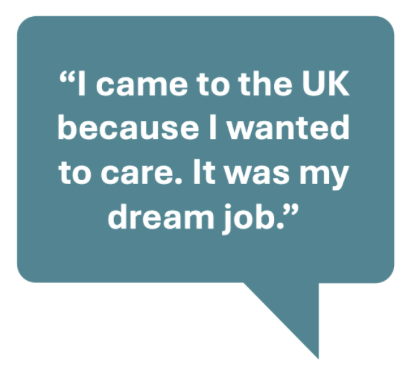
One care worker told us:
“The council stepped in. They helped me understand my rights. They listened.”
When the reality hit
But we cannot avoid the truth: many are still struggling. When sponsorships are revoked, lives are thrown into chaos. Some have had to sleep on floors, turn to foodbanks, or live with deep uncertainty about their future. The July 2025 closure of the Health and Care visa route has added even more fear and complexity.
Behind every success story, there are others still waiting for answers, still living with insecurity, still carrying the weight of broken promises.
What this has taught us
This experience has shown the strength of local systems here in the West Midlands. Councils, providers, charities (like Tulia and the Citizens Advice Bureau (CAB)), and community groups have stood alongside international workers when national systems felt far away. Acts of solidarity have made a profound difference – a phone call returned, a bed found, a new job secured.
It has also highlighted how essential trust is and how community organisations such as CAB, Tulia, and the Refugee and Migrant Centre play a critical role in providing clear advice, practical guidance, and reassurance when workers may feel unable or too afraid to approach official channels. These groups often act as the first safe point of contact, helping workers understand their rights, navigate complex processes, and feel supported during moments of real uncertainty.
Across the region, collaboration has shown that when councils, providers, charities and community leaders act together, outcomes improve – not only for individual workers but for the wider care system that depends on them.
Looking forward
International care workers have cared for people in our communities, supported those living with dementia, and worked in homes across the region. They have become part of communities and, in many cases, built new lives here.
But the journey is not finished. Many still need support – not only in finding jobs, but in feeling secure, valued, and able to thrive.
Their story is one of hope, resilience, and courage. But it is also a reminder that international care workers remain vulnerable, and that continued collaboration is essential if we are to truly deliver on the promise they came here for.
Support is still available
Help will continue across the West Midlands until March 2026. This includes:
If you are an international care worker needing help – or a provider who can offer support – please reach out.