Practitioners from across the West Midlands come together monthly to reflect on the growing challenge of exploitation in our communities. July’s conversation highlighted a shared reality: exploitation is rarely straightforward, and often sits beneath issues that services encounter every day, including housing, safeguarding, substance misuse, mental health, anti-social behaviour and workforce exploitation.
A recurring theme was professional curiosity. Rather than focusing solely on presenting issues, practitioners emphasised taking time to understand a person’s experiences, recognising that trust is built over time and that meaningful disclosure rarely happens during a first conversation.
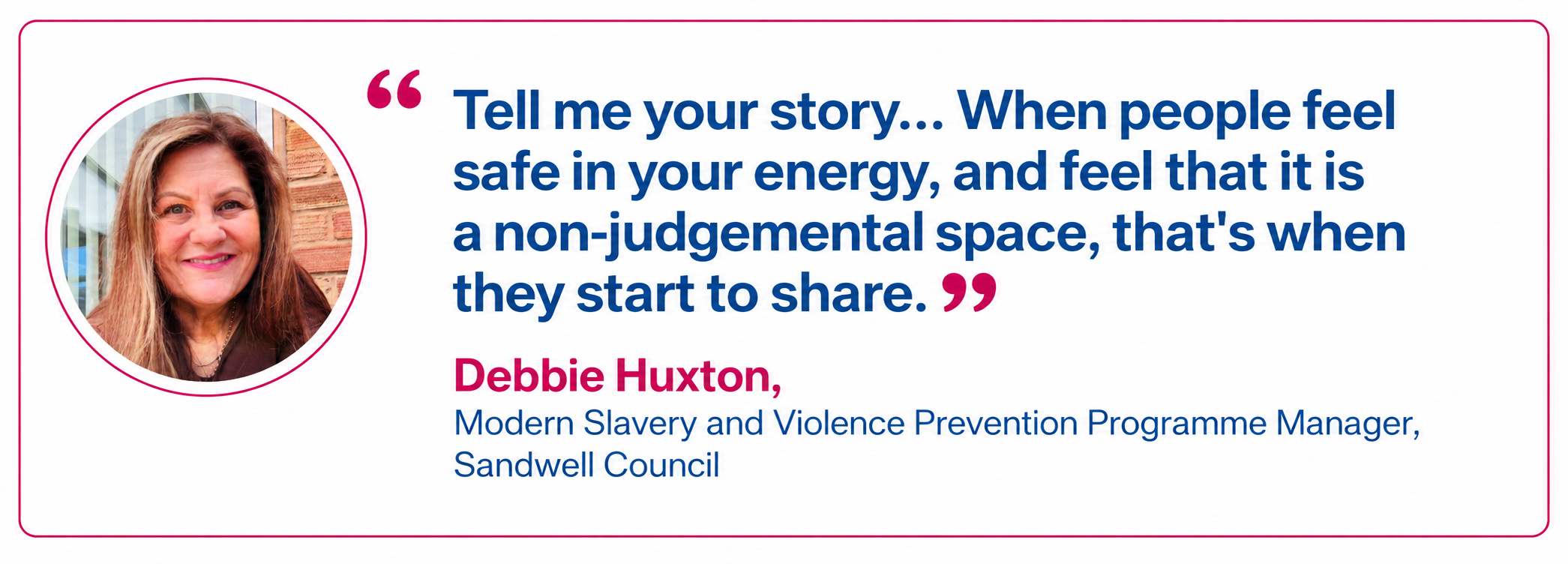
As Debbie Huxton, Modern Slavery and Violence Prevention Programme Manager at Sandwell Council, reflected:
“Tell me your story… When people feel safe in your energy, and feel that it is a non-judgemental space, that’s when they start to share.”
The discussion reinforced that safeguarding people experiencing exploitation cannot sit within one service alone. Strong partnerships between housing, adult social care, children’s services, community safety, police, public health, commissioning teams and the voluntary and community sector are essential to identifying patterns, sharing intelligence and responding effectively.
Crucially, many of the people practitioners encounter may not immediately identify themselves as victims of exploitation. Debt, homelessness, poor mental health, substance misuse, coercion, adverse childhood experiences and insecure immigration status can all intersect, making engagement complex and requiring a trauma-informed, person-centred approach.
Practitioners also reflected that our first response should not be to investigate, but to build trust. Conversations that begin with a person’s welfare, rather than a checklist of questions, create the foundations for meaningful safeguarding. As several contributors observed, people rarely accept help the first time they are asked. Relationships take time, and practitioners need the confidence and capacity to stay alongside individuals as trust develops.
The discussion also highlighted the importance of looking beyond the presenting concern. Professional curiosity extends to asking wider questions: Who owns the property? What do we know about the landlord? Are there links to other addresses or agencies? What intelligence already exists? By connecting information across organisations, practitioners are often able to identify patterns of exploitation that would otherwise remain hidden.
Another key learning was not to assume that someone else had acted. Following up referrals, seeking feedback and maintaining communication between partners strengthens safeguarding practice and helps staff understand the difference their work is making.
Across the region there was recognition that exploitation work is complex and time intensive. There is a real need for organisations to create the time and space required to build relationships, undertake thorough enquiries and work effectively across agency boundaries. Quality conversations, not simply quantity of contacts, are what lead to better outcomes.
Our collective call to action
The discussion reinforced that preventing exploitation is not the responsibility of one team or one organisation. Every housing officer, social worker, safeguarding practitioner, community safety officer, commissioner, health professional and voluntary sector partner has a role to play.
Together we can:
- Be professionally curious: Take time to understand a person’s story, not just their presenting circumstances.
- Start with welfare: Trust is built through compassion, listening and relationship-based practice.
- Recognise hidden vulnerability: Exploitation often sits alongside trauma, homelessness, substance misuse, poor mental health and financial hardship.
- Share intelligence and work collaboratively: No single agency holds the full picture.
- Challenge assumptions: Don’t assume another organisation has taken action; follow up, communicate and learn together.
- Create feedback loops: Understanding what happened after a referral helps improve practice and motivates staff.
- Give practitioners time to work with complexity: Meaningful safeguarding requires space to build trust and explore concerns thoroughly.
- Continue learning together: Regional collaboration helps us identify emerging trends, strengthen practice and improve outcomes.
Perhaps the strongest message from the session was that we don’t always need complex tools or specialist techniques to make a difference. We need the confidence to ask, the curiosity to listen and the commitment to stay alongside people long enough for trust to grow.
As one practitioner reflected at the end:
“We don’t have to be expert interviewers. We just have to have a human heart.”
That simple sentiment captured the spirit of the discussion. Behind every referral, every safeguarding concern and every piece of intelligence is a person with a story. By listening, working together and remaining professionally curious, we can better recognise exploitation, strengthen our partnerships and ultimately improve outcomes for some of the most vulnerable people in our communities.
Local Authorities can find out more about these sessions here.